Bhutan Bicycle Tours Above the Clouds
Small-group cycling trips through Himalayan valleys, high passes, monasteries, and mountain towns
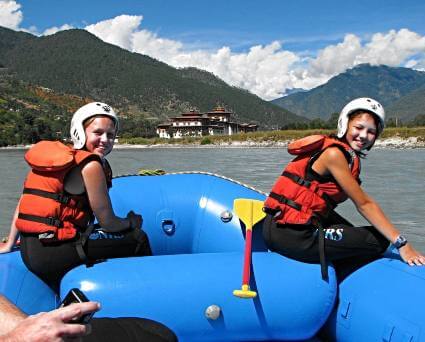
Moderate
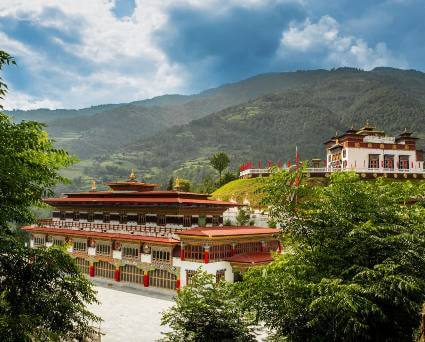
Ambitious
A Few Things You May Be Wondering
When is the best time for a bicycle tour in Bhutan?
Spring and fall generally bring the most comfortable combination of temperatures, road conditions and mountain views. Summer is greener and warmer but also wetter, while higher elevations can become quite cold outside the main riding season. We choose departure periods that normally work well for the particular route rather than treating Bhutan as though every valley and mountain pass shares the same weather.
How fit do I need to be for a bicycle tour in Bhutan?
It depends very much on which trip you choose. Bike Across Bhutan is best suited to cyclists who ride regularly and are comfortable spending several hours on the bike over consecutive days. The terrain is mountainous, with long climbs and equally long descents.
Bhutan Multisport is quite suitable for beginners. Its cycling days are shorter and less demanding, with hiking, rafting and cultural activities mixed into the itinerary. On some days, climbing all the way to a mountain pass is an optional extra for riders who want more of a challenge rather than something everyone is expected to complete.
How much climbing is involved?
Quite a bit on Bike Across Bhutan. Roads repeatedly climb from river valleys to mountain passes and descend into the next valley before doing it again. The terrain is one of the defining features of crossing Bhutan by bicycle. The Multisport trip includes mountain riding as well, but its cycling days are shorter and make up only part of the overall journey.
Does Bhutan's altitude make the cycling more difficult?
Yes, although the effect is often subtler than people expect. At higher elevations you may simply find yourself considerably more tired than you would be after a ride of the same distance and climbing back home.
Our routes also follow the mountaineer's familiar "climb high, sleep low" principle. In our case, we pedal high over the passes during the day and generally sleep lower in the valleys at night, which helps the body adjust to the changing elevation. Pacing still matters more than speed when the road heads uphill.
What are the roads and traffic like for cyclists in Bhutan?
Traffic is generally light, especially outside Paro and Thimphu, but road surfaces are not uniformly smooth. Much of the riding is on paved mountain roads, where surfaces can range from reasonable asphalt to coarse pavement, repaired sections and occasional construction. We use mountain bikes because their wider tires and more forgiving setup are better suited to Bhutan's variable road surfaces, not because the tours include off-road riding or trails.
How far do we cycle each day?
It depends very much on the trip. Bike Across Bhutan is the more cycling-focused journey, with main riding days generally ranging from about 55 to 100 kilometers. The Bhutan Multisport trip has shorter rides, generally about 25 to 58 kilometers, because cycling shares the itinerary with hiking, rafting and cultural activities. Individual tour pages show the daily distances and terrain in detail.
Are Pedalers' Bhutan bicycle trips fully guided and supported?
Yes. Both trips are fully guided and supported, with on-bike guides traveling with the group and a support vehicle carrying luggage, water and other necessities. The guide team handles navigation, cultural visits and the practical logistics of moving through Bhutan, allowing you to concentrate on the riding and the country around you.
Does the support vehicle follow cyclists all day?
No. We use a leapfrog system on all of our supported bicycle tours rather than having a van follow directly behind the group. The vehicle moves ahead to practical stopping points while remaining in contact with the on-bike guides.
This is particularly important on Bhutan's narrower roads. A vehicle creeping behind a group of cyclists can obstruct other traffic and actually make riding less safe. Leapfrog support keeps the road clear while still putting the vehicle where riders need it for water, breaks or a lift.
What happens if I need a break or cannot finish a climb?
Take the break. The support vehicle is there for exactly that reason. Your guide can contact the driver and arrange a lift from a practical pickup point, allowing you to skip part of a climb, rest for a while or continue to the hotel. There is no requirement to prove anything by riding every kilometer.
How large are the groups on Bhutan bicycle tours?
Pedalers keeps its Bhutan departures small, generally around 10 to 12 guests rather than the 16 to 20 riders sometimes described as a small group. Smaller numbers work particularly well in Bhutan, where roads, hotels, restaurants and cultural sites are better suited to traveling without a crowd.
Can solo travelers join a Bhutan bicycle tour?
Absolutely. Solo travelers regularly join our small-group departures, and a group of around 10 to 12 guests is large enough to be social without making someone traveling alone feel lost in a crowd. Individual tour pages show any applicable single-room pricing or supplement.
What kind of accommodations do you use on the Bhutan trips?
We generally favor comfortable upper-midrange hotels, often smaller locally owned and managed properties with Bhutanese architecture and plenty of local character. Hospitality, location and sense of place matter more to us than a formal star rating.
Bike Across Bhutan travels farther into remote parts of the country and includes a couple of simpler overnight stays, including the village farmstay in Ura. Bhutan Multisport generally stays in the more comfortable style of properties we favor elsewhere in Asia.
What is the food like on a Bhutan bicycle tour?
Meals focus mainly on Bhutanese and Indian cuisine. Rice, vegetables, soups, curries, meat, cheese and chilies appear regularly, and your guides can introduce regional dishes while helping guests who prefer milder food find comfortable choices. More familiar international dishes can usually be requested, but local and regional cooking remains the focus of the trip.
What is the difference between Bike Across Bhutan and Bhutan Multisport?
Bike Across Bhutan is the choice for travelers who want cycling to be the heart of the journey. It crosses the country from east to west over 12 days, with long riding stages, major mountain passes and extended descents.
Bhutan Multisport is an 8-day trip that combines shorter bicycle rides with hiking, white-water rafting and cultural exploration. It is better suited to travelers who want to experience Bhutan actively without making every day primarily about cycling.
Do the Bhutan trips include the hike to Tiger's Nest?
Yes. A visit to Taktshang Goemba, better known as Tiger's Nest Monastery, is part of both Bhutan journeys. Reaching the monastery requires a substantial walk uphill, so even on the cycling-focused trip you should arrive prepared to spend some time on your feet.