France Canoeing, Without Roughing It
Inn-to-inn canoeing trips through rivers, villages, chateaux, and the good life
Leisurely
Leisurely
A Few Things You May Be Wondering
Do I need previous canoeing experience?
No. These trips are suitable for beginners, and your guides teach the basic paddling and boat-handling skills you need at the start.
The Dordogne is particularly gentle, while the Allier has a little more moving water and a few small rapids. Neither trip requires technical whitewater skills.
Do I need to know how to swim?
Yes. French regulations require canoeists to be able to swim and to be comfortable in the water.
You wear a personal flotation device while paddling, but basic swimming ability is still required.
Are the rivers difficult? Are there rapids?
The Dordogne section we paddle has no real rapids. Occasionally a shifting gravel bar may concentrate the current enough to produce a few ripples, but the river is perfectly suitable for beginners.
The Allier is livelier. Gravel bars beneath the surface create numerous small rapids, mostly Class I, with a few that can reach Class II when the river is flowing faster. There are also a couple of water-level control dams with chutes that can be paddled through.
Guests who prefer not to run a chute can walk around it. The rapids themselves are well within the ability of casual paddlers who listen to the guide's advice about how to approach them.
What happens if the canoe tips over?
First, you get wet.
Capsizes are uncommon on the sections we paddle, but they can happen. You wear a flotation vest, and your guides explain what to do if you end up in the water.
The key is to stay calm, follow the guide's instructions and move yourself and the canoe safely toward shore.
How many hours a day do we paddle?
Most days involve roughly three to five hours on the water, usually broken up by stops along the way.
These are journeys of discovery rather than mileage contests. There is time to stop for lunch, explore a village, stretch your legs or simply enjoy the riverbank for a while.
How fit do I need to be?
You do not need exceptional upper-body strength, but you should be comfortable being active for several hours a day.
Canoeing uses muscles differently from walking or cycling, so even fit travelers may notice shoulders and arms they had temporarily forgotten about. Technique matters more than brute strength, and the river current does much of the work of moving you downstream.
Are Pedalers' France canoe tours guided?
Yes. Your guides paddle with the group, help with technique, read river conditions and choose the best line through moving water.
Our canoe guides are not simply general adventure guides assigned to a river for the week. They have many years of experience paddling and guiding on the particular river they work on, so they know its currents, changing conditions, landing points and little quirks from firsthand experience.
That local river knowledge becomes especially valuable on the Allier, where water levels and the position of gravel bars can change how individual sections behave.
What happens if it rains or river conditions change?
A little rain is not normally a reason to stop paddling. We dress appropriately and generally keep going.
River level and current matter more than whether rain happens to be falling at that particular moment. Heavy rain upstream can change conditions later, while low water can also affect particular stretches.
Your guides and local partners monitor the river and adjust the plan when necessary. That may mean changing the timing, using a different section or substituting another activity if conditions are not suitable.
What equipment is provided?
We provide the canoeing equipment needed for the journey, including canoes, paddles, flotation vests and waterproof storage for the personal items you want with you during the day.
You simply dress for the weather and bring the personal gear recommended in your trip preparation information.
What happens to my luggage, and do I need to carry camping gear?
Your main luggage travels by road between accommodations while you travel down the river.
You paddle with only what you need for that day's outing, kept in waterproof storage. There is no tent, sleeping bag, cooking kit or several days of supplies packed into the canoe.
When you arrive at the next inn or hotel, your luggage is already there waiting for you.
What is an inn-to-inn canoe journey?
Think of an inn-to-inn cycling trip with the river replacing the road.
Each day moves you farther downstream through the countryside to another village or overnight stop. At the end of the paddle, your luggage is waiting, along with a comfortable room, a shower and, usually before too long, a multi-course French dinner.
It keeps the progression and adventure of a multi-day river journey while replacing the tent and camp stove with historic inns, village hotels and regional food.
What kind of accommodations do we stay in?
We generally use comfortable upper-midrange properties with plenty of local character.
Depending on the itinerary, that might mean a renovated castle, a small village inn or a historic property whose story reaches back centuries, sometimes as far as the era of the Templar Knights. We favor places with personality, hospitality and a strong sense of place rather than familiar international chains.
What do we eat on a canoe trip?
This is France, so we see no reason why several days on a river should mean several days of camp food.
Many dinners are based on the chef's suggestions for the evening, often served as multi-course meals highlighting regional cuisine. The Dordogne brings the rich food traditions of the Périgord, while the Allier takes us into the cuisine of Auvergne.
Meals are part of the journey through the region, not simply fuel for the next day's paddling.
How different are the Dordogne and Allier canoe trips?
Quite different.
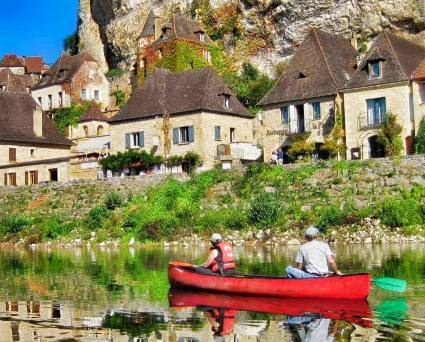
The Dordogne combines gentle paddling with limestone cliffs, riverside villages, castles and the celebrated food culture of the Périgord. It is an easygoing river particularly well suited to first-time paddlers.
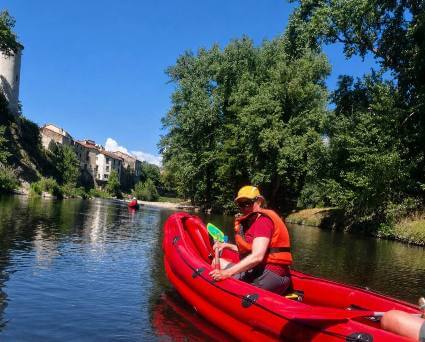
The Allier feels wilder and less developed, with forested banks, volcanic landscapes and smaller communities. It also has more moving water, with frequent small Class I rapids, occasional Class II conditions and a couple of dam chutes that add a little more excitement without turning the trip into a technical whitewater journey.