Polynesia Bicycle Tours with Salt Air in the Gears
Small-group cycling trips through French Polynesia, islands, lagoons, coastlines, and village roads
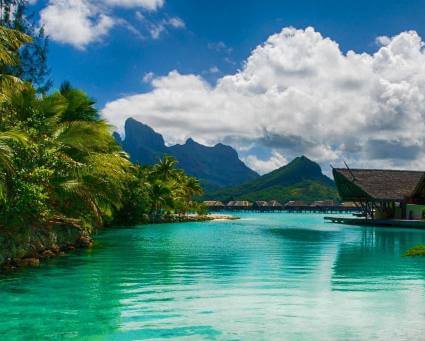
Leisurely
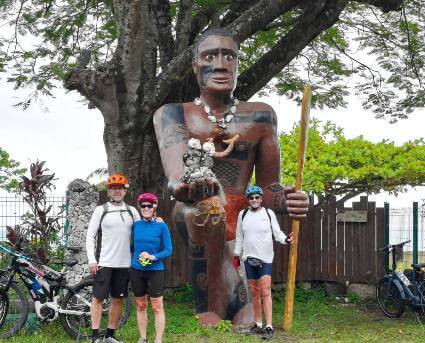
Leisurely
A Few Things You May Be Wondering
When is the best time for a bicycle tour in French Polynesia?
Temperatures remain warm throughout the year, so the main seasonal differences for cyclists are humidity and the frequency of passing showers rather than any dramatic change from hot to cool.
Roughly May through October tends to be less humid and somewhat drier. November through April brings greater humidity and more frequent showers, although tropical rain often arrives, does its thing and moves on.
What are the roads and traffic like?
Most of our riding is on paved island roads, with occasional rougher pavement and short dirt-road sections when accessing particular places.
Traffic tends to concentrate around the ports and principal towns. On Mo'orea, for example, most of it is between the ferry port at Vai'are and the Cook's Bay area; beyond that, the roads become remarkably quiet. Huahine and Ra'iātea also have long stretches with very little traffic.
Bora Bora is surprisingly quiet away from Vaitape. Many of its larger hotels are on offshore motus, with guests traveling by boat rather than adding vehicles to the island's roads.
How hilly are the islands?
Despite all those dramatic volcanic peaks, much of our riding stays near the coast and is relatively flat or gently rolling.
Huahine is the notable exception. Traveling between Huahine Nui and Huahine Iti involves a couple of substantial climbs, giving that island some of the more energetic riding of the trip.
How fit do I need to be?
These are leisurely bicycle tours designed for recreational cyclists rather than racers. You should be comfortable spending a few hours on a bicycle and riding on consecutive days, but we are not trying to manufacture difficulty simply because mountains happen to be visible.
Humidity and tropical sunshine can add to the effort, and Huahine includes some meaningful climbing, so a reasonable level of cycling fitness makes the trip more enjoyable.
How far do we ride, and how much of the day is spent cycling?
Distances vary by island, with most riding taking up part rather than all of the day. That leaves plenty of time for cultural stops, lunch, swimming, snorkeling or simply enjoying the hotel and lagoon.
There are not many roads to choose from on these islands, so we design our rides as loops that circumnavigate the islands rather than sending you out and back along the same roads. The objective is variety and exploration, not adding kilometers simply to make the numbers bigger.
Do we bicycle on Tahiti itself?
Not anymore. When Pedalers first operated trips in French Polynesia in the 1980s and early 1990s, we rode completely around Tahiti, including an overnight stop on Tahiti Iti. Traffic was moderate to light and the ride worked well.
Tahiti has grown considerably since then. Much of the coastal route is now busy, with four-lane highways and substantially more traffic, so today's tours begin riding after we leave Tahiti for Mo'orea. Fortunately, the other islands have remained quiet and more local, which is exactly the riding environment we want for these trips.
How are the Polynesia bicycle tours supported?
These trips are guided and lightly supported rather than accompanied by our usual sag wagon. The inter-island ferries we use do not transport cars or trucks, making it impossible to move a support vehicle from island to island with the group.
Your guide rides with you carrying tools and basic spares, and local taxis or hotel vehicles provide backup when needed. If you have had enough riding for the day, we can arrange a lift rather than turning every kilometer into an obligation.
Your luggage is transferred between hotels and ferries for you and handled during loading and unloading. You do not have to schlep bags through the ports or carry luggage on your bicycle.
How do the bicycles travel between islands?
The bikes travel on the ferries with us. Depending on the vessel and crossing, they are either rolled aboard or handled by the ferry crew.
Using ferries lets the bicycles move naturally through the islands with the group rather than treating them as oversized baggage on a succession of inter-island flights.
What type of bicycles do you use?
We use hardtail mountain bikes with a front shock for added comfort. They handle the islands' mixture of smooth pavement, rougher road surfaces and occasional short dirt sections particularly well while still being comfortable for relaxed road touring.
eBikes are also available for guests who prefer some assistance on the climbs or simply want to make the riding a little easier.
What happens if it rains while we're cycling?
Mostly, we get wet.
Passing tropical showers are part of Polynesian weather and are usually more inconvenience than drama. If conditions are reasonable, we keep riding. If unusually heavy rain or other conditions make riding unwise, the guides can adjust the plan.
How large are the groups, and can solo travelers join?
Our scheduled departures are small, generally no more than about 12 guests. That works particularly well in Polynesia, where restaurants, ferries and smaller hotels are better suited to an intimate group than a busload of travelers.
Solo travelers are very welcome and quickly become part of the group while still having plenty of opportunity for independent time.
How is a Pedalers bicycle tour different from a bike-and-cruise program?
Both styles can be enjoyable, but they create very different journeys. Bike-and-cruise programs use the ship as the hotel and dining room, with visits ashore during the day. Pedalers stays on the islands, travels between them by local ferry, eats in island restaurants and uses island hotels and services throughout the journey.
When the day's ride finishes, you have not left the island to return to a floating hotel. You are still there, with the restaurant, beach, village and evening around you.
It also changes where the money goes. The majority of what it costs us to operate the tour is spent directly with Polynesian hotels, restaurants, ferries, guides and other island businesses.