Thailand Bicycle Tours with a Local Pulse
Small-group cycling tours through temples, markets, coastlines, and mountain roads
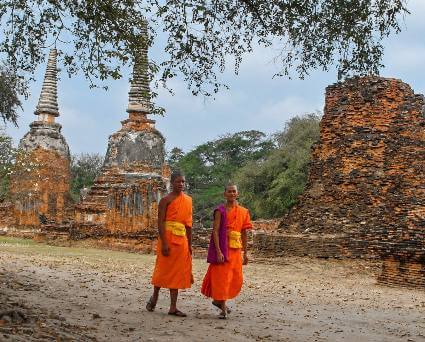
Moderate
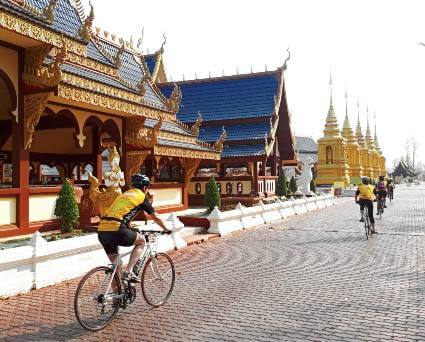
Leisurely
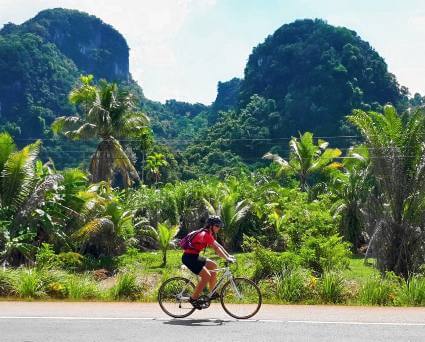
Leisurely

Extreme
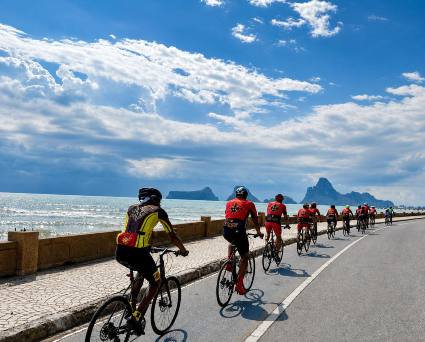
Moderate
Leisurely
Leisurely
A Few Things You May Be Wondering
When is the best time for a bicycle tour in Thailand?
Thailand's winter months, roughly November through February, generally bring the coolest and driest cycling weather, particularly in the north. The green season, often called the rainy season, brings warmer, more humid conditions and greener countryside. In northern Thailand it typically runs from around July into early October, while wetter conditions in parts of the south can continue into late November. Because weather patterns vary considerably by region, we schedule each tour for the seasons that normally provide the best combination of riding conditions, scenery and local experiences along that particular route.
Is cycling in Thailand safe?
Thai drivers are generally very accustomed to sharing the road with slower traffic. Scooters, farm vehicles, bicycles and even the occasional water buffalo are part of everyday road life, particularly outside the cities. Bicycles were once a primary form of transportation in rural Thailand, and you still regularly see older residents cycling to markets and around their communities. As with cycling anywhere, good route selection matters, so our tours avoid busy roads wherever practical and use quieter secondary and rural roads.
What are the roads and traffic like for cyclists in Thailand?
We do not build our tours around Thailand's major highways. Our routes favor secondary highways and rural roads, with morning shuttles used where necessary to avoid busy city streets and rush-hour traffic. Roads are paved almost everywhere we ride, although surfaces range from smooth asphalt to coarser concrete. Occasional construction, road repairs and short dirt stretches are simply part of traveling by bicycle and can occur on almost any tour.
How fit do I need to be for a Thailand bicycle tour?
That depends on the trip. The bigger consideration is usually endurance rather than speed. You should be comfortable spending several hours on a bicycle and doing so on consecutive days. Tour pages provide daily distances and difficulty information so you can choose a trip that matches your experience and fitness.
How far do you cycle each day?
Daily distances vary considerably between tours and even from one day to the next. Some days are intentionally shorter to allow time for temples, markets or other stops, while longer days make the journey itself the main event. Each itinerary lists the expected riding distances so you can see exactly what a particular trip involves.
Are Pedalers' Thailand bicycle tours guided and supported?
Yes. Our Thailand trips are fully guided and supported. On-bike guides travel with the group, while a support vehicle carries luggage, water and other necessities and provides assistance throughout the riding day. These are supported journeys rather than self-guided cycling holidays, so route finding, luggage transfers and day-to-day logistics are handled for you.
What happens if I need a break or cannot finish the day's ride?
That is one reason we travel with a support vehicle. If you are tired, uncomfortable or simply decide you have ridden enough for the day, you can usually take a break in the vehicle and rejoin the ride later or continue to the hotel. There is no prize for suffering through a ride you are no longer enjoying.
How large are the groups on your Thailand cycling tours?
Small really does mean small at Pedalers. Our Thailand departures are typically limited to around 10 to 12 guests, rather than the 16 to 20 riders sometimes described as a small group elsewhere. Smaller numbers make it easier to move through villages, stop at local restaurants and markets, and keep the experience personal. Some cyclists prefer the social atmosphere of a much larger group, so our style will not suit everyone.
Can solo travelers join your Thailand bicycle tours?
Yes. Solo travelers regularly join our small-group departures, and the group size makes it easy to become part of the trip rather than feeling like an extra among couples or friends traveling together. Individual tour pages show any applicable single-room pricing or supplement.
Can I use an eBike on a Thailand bicycle tour?
Yes. eBikes are available as an option on all of our Thailand bicycle tours. On tours designed primarily for regular bikes, an eBike can be requested for a supplemental charge. This can be particularly useful for couples or friends with different riding strengths who still want to travel together.
Can cyclists of different abilities travel together?
Often, yes. Small groups, support vehicles and eBikes can make it much easier for friends or couples with different riding strengths to enjoy the same journey. The best solution depends on the particular route and the difference between the riders, so it is worth discussing before choosing a tour.
What kind of hotels do you use on Thailand bicycle tours?
We have never been very interested in run-of-the-mill hotels. Most of the properties we choose are smaller, locally owned and managed hotels with a strong sense of place. They may reflect traditional Thai architecture, occupy a restored historic building, or be the product of an architect with a particularly vivid imagination.
We generally look for comfortable upper-midrange properties rather than luxury for luxury's sake. Character, hospitality and location matter more to us than a star rating, especially since hotel rating systems vary so widely from one country to another. Even in Bangkok and other larger cities, we tend to favor distinctive boutique properties over familiar international chains. Guests often remember the hotels as part of the journey rather than simply places where they slept.
What is the food like on a Thailand cycling tour?
Food is one of the pleasures of cycling through Thailand. Meals change as we move between regions, and riding gives us plenty of excuses to stop for fruit, noodles, sweets, market snacks and other local specialties along the way. We use restaurants and dishes that help introduce regional cooking rather than treating meals simply as fuel between rides.
For a closer look, see our story about a day cycling through Thailand and the foods that turn up along the way.