Scotland Canoeing with a Wee Dram at the End
Small-group canoeing trips through Highland rivers, whisky country, and riverside villages
Our canoe journeys are inn-to-inn: paddle downstream by day, stay in welcoming local inns and enjoy regional cuisine by night, with local guides tying the experience together. Discover how inn-to-inn canoeing works.
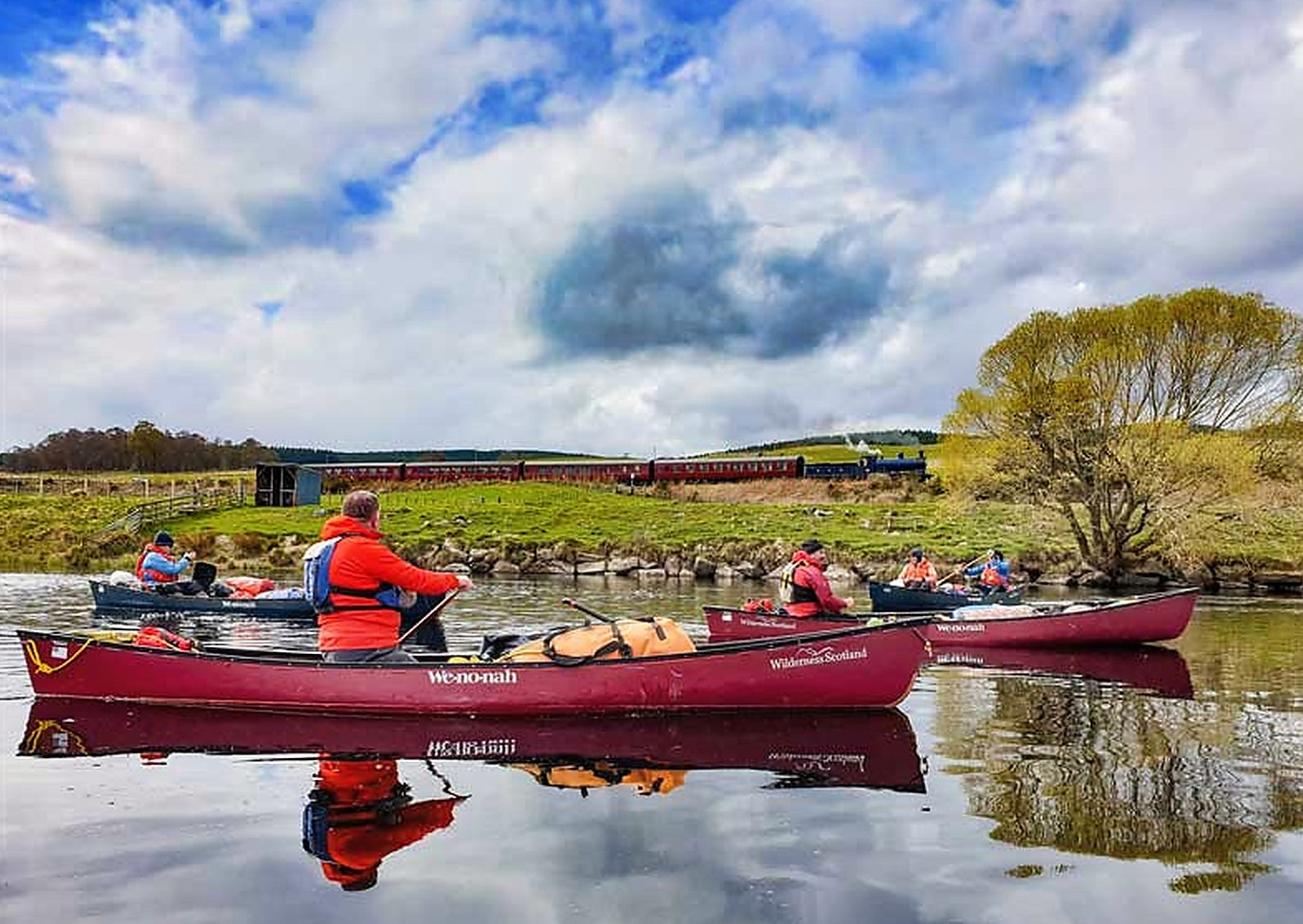
A Few Things You May Be Wondering
Do I need previous canoeing experience to paddle the River Spey?
Some previous paddling experience is useful because the Spey is livelier than the Dordogne, but you do not need to be a whitewater expert.
We begin with a warm-up session and practice the skills needed for moving water before reaching the more interesting sections of river. The trip is designed so casual paddlers can build confidence as the journey progresses.
How difficult is canoeing the River Spey?
The Spey combines long stretches of straightforward paddling with a number of fun smaller rapids and a couple of named sections, the Washing Machine and Knockando, that will definitely grab your attention.
How lively any rapid feels depends partly on the river level and flow that day. None requires technical whitewater experience, but moving water does require paying attention. Your guides explain what is ahead, show you the best approach and talk you through the section before you paddle it.
What happens if the canoe tips over?
First, Scotland becomes even wetter.
Capsizing is possible when paddling moving water, which is why we practice boat handling and recovery skills and wear life jackets whenever we are on the river.
Your guides explain what to do before the trip reaches the livelier water, so an unexpected swim becomes something to handle calmly rather than invent procedures for while floating downstream.
How fit do I need to be for a Scotland canoe tour?
You should be comfortable being active for several hours and have enough general fitness to paddle on consecutive days.
The river current does much of the work of moving us downstream, but steering, controlling the canoe and negotiating faster water require effort and concentration. Technique becomes increasingly important as the week progresses.
How long do we paddle each day?
The days vary considerably. Some are shorter to leave time for whisky visits or other exploration, while others follow the river for a longer distance.
That variation is intentional. These are journeys of discovery rather than mileage contests, so the river, villages, distilleries and other discoveries all help determine the rhythm of the day.
Are Pedalers' Scotland canoe trips guided?
Yes. Our guides have extensive experience on the Spey itself, not simply general outdoor qualifications and a map of the river.
They know how individual rapids change with water level, where currents form, the best landing points and how to prepare paddlers for what lies around the next bend. Just as importantly, they know Speyside and can introduce the communities, whisky traditions and landscapes beyond the water.
Their job is not simply to get you down the river, but to help you discover the region through it.
What happens if it rains or the river level changes?
We put on the appropriate gear and, in most ordinary Scottish rain, continue paddling.
River conditions matter more than rain falling at that particular moment. Heavy rainfall in the catchment can alter the river's speed and the character of individual rapids, so the guides monitor conditions and adjust the day's plan when needed.
What canoeing equipment is provided?
We provide the canoes, paddles, life jackets and other specialist river equipment needed for the journey.
You bring appropriate personal clothing for Scottish conditions, including waterproof layers. The detailed trip preparation information explains what to pack before departure.
What happens to my luggage, and do I need camping gear?
Your main luggage travels separately while you paddle and is transferred between the hotels.
You carry only what you need during the day's paddle in waterproof storage. There is no tent, sleeping bag, cooking equipment or several days of supplies loaded into the canoe.
At the end of the day your luggage and a comfortable hotel room are waiting.
What is an inn-to-inn canoe journey on the Spey?
It is one continuous journey downstream rather than several unrelated day paddles.
We begin high in Speyside and progressively follow the river toward the sea, with each day's take-out becoming the starting point for the next section. Hotels and villages along the route provide the overnight stops while luggage moves independently by road.
It gives the trip the feeling of a genuine river expedition while replacing the campsite with a hot shower, comfortable bed and Scottish dinner.
What kind of accommodations do we use?
We stay in comfortable Highland hotels and distinctive smaller properties selected for their character, hospitality and location.
Our current route includes traditional and Victorian-style hotels as well as a family-run boutique property overlooking the Spey Valley. The hotels are part of experiencing Speyside rather than simply somewhere to sleep between paddling days.
What do we eat on a Scotland canoe trip?
Expect hearty breakfasts and dinners built around Scottish and regional ingredients, with seafood, salmon, beef, game and local produce appearing along the way.
Lunches fit the rhythm of the river, often picnics or casual meals, while evenings give us more time to settle in and enjoy the region's food. And because this is Speyside, a whisky may occasionally find its way onto the table as well.
Do I have to like whisky to enjoy the trip?
Not at all.
Whisky is woven into Speyside's landscape and history, so distilleries and tastings naturally become part of the journey. But tasting is optional, and the trip stands perfectly well on its river, scenery, villages, food and lively paddling.
You can learn why Speyside whisky matters without developing a sudden desire to collect single malts.