France, Best Enjoyed Slowly
Active trips through rivers, villages, chateaux, markets, inns, and the generous side of French country life
Leisurely
Leisurely
A Few Things You May Be Wondering
When is the best time to visit rural France?
Spring through fall works well for the regions Pedalers visits, with one notable exception: we generally avoid mid-July and August.
That is when much of Europe goes on vacation, popular river stretches become noticeably busier, and many small towns and attractions are at their most crowded. Late spring, early summer and September tend to offer a better balance of pleasant weather, long days and a more relaxed atmosphere.
What parts of France does Pedalers explore?
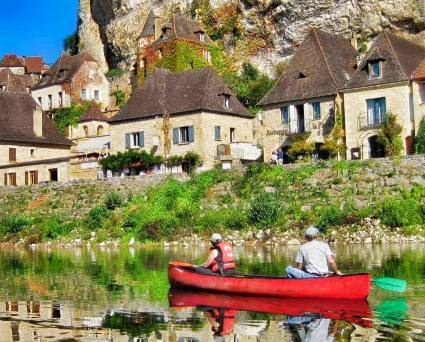
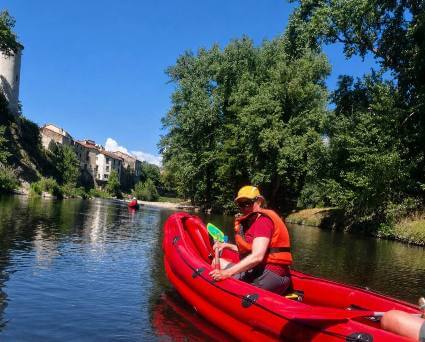
Our canoe journeys explore two very different corners of rural France. The Dordogne takes us through the Périgord, a landscape of limestone cliffs, medieval villages, castles and one of France's strongest regional food traditions. The Allier flows through the Auvergne, where the countryside feels wilder, greener and less developed.
The two rivers offer very different versions of France, which is part of why we operate both rather than trying to make one river stand in for the entire country.
Is canoeing a great way to explore France?
Very much so. France is often explored on foot or by bicycle, but some of its most interesting countryside was shaped around rivers.
From a canoe, the journey unfolds at a wonderfully human pace. You approach villages from the water, paddle below castles and cliffs, stop when something catches your attention, and experience stretches of countryside that roads often miss entirely.
What is an inn-to-inn canoe journey?
It is a continuous point-to-point journey, with the river carrying you from one overnight stop to the next rather than a series of separate day paddles in different places.
You follow the river downstream through changing countryside, stop to explore villages and historic sites along the way, and eventually step ashore near the next inn or hotel. Your luggage has traveled ahead by road, so there is no need to carry camping gear or several days of clothing in the canoe.
The next morning, you return to the river and continue the journey downstream.
What is a typical day on the river like?
Days usually begin over a relaxed breakfast with fresh breads and pastries, fruit, cheese and proper coffee before we head back to the river.
Once on the water, the current does much of the work as we paddle through the French countryside. We might stop for a picnic lunch, pull into a village for a café meal, explore a riverside château or historic town, or simply linger somewhere that looks too inviting to pass by.
By afternoon we reach the next overnight stop, where our luggage is waiting. After a shower and a little time to explore, the day usually ends with a multi-course dinner built around the food and traditions of the region.
The rhythm is simple: paddle, discover, eat well, settle into a comfortable room for the night, then continue downstream the next morning.
Do I need to camp on a Pedalers canoe trip?
No. Although camping and riverside bivouacs are common on multi-day canoe trips, Pedalers takes a different approach.
Your main luggage travels ahead by road, and every evening ends at a comfortable inn or hotel. There is no tent, sleeping bag, stove or several days of supplies packed into the canoe. You get the river adventure without giving up a shower, a real bed and a good French dinner.
What is the food like in the regions Pedalers visits?
Food is one of the pleasures of traveling through rural France, and both regions have strong culinary traditions.
Many dinners are based on the chef's suggestions for the evening, often served as multi-course meals highlighting regional ingredients and dishes rather than ordering individually from a large à la carte menu.
The Périgord is particularly known for duck and goose, walnuts, mushrooms, truffles, cheeses and local produce, while Auvergne has its own hearty regional cooking and strong cheese tradition.
What kind of accommodations do you use in France?
We generally use comfortable upper-midrange properties with plenty of local character.
That can mean a renovated castle, a small village inn or a historic property whose story reaches back centuries, sometimes as far as the era of the Templar Knights. We favor places with personality, hospitality and a strong sense of where you are rather than familiar international chains.
Do I need to speak French?
No. Your guides handle the practical conversations involved in the journey, and English is understood at many hotels and tourism businesses.
These trips spend much of their time in smaller towns and rural areas rather than major international tourist centers, so a few words of French and a willingness to use them are always appreciated.
Can vegetarian, vegan or other dietary needs be accommodated?
Sometimes, but this is one area where we ask guests to speak with us before booking.
Many of the inns and hotels we use serve a set menu or the chef's selection for the evening rather than a large à la carte menu. Vegetarian and vegan meals may be possible with advance planning, but flexibility varies considerably from one small rural kitchen to another.
If you have dietary restrictions, reach out before booking so we can give you realistic guidance for the specific itinerary.