French Polynesia with Salt Air in Every Mile
Island cycling trips through lagoons, village roads, volcanic peaks, beaches, flowers, and warm Pacific light
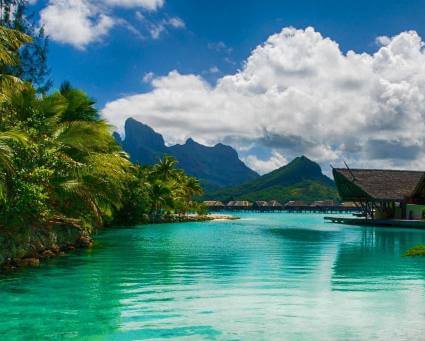
Leisurely
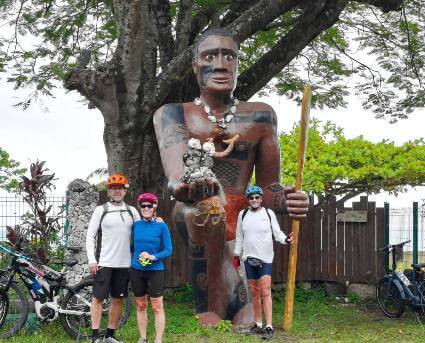
Leisurely
A Few Things You May Be Wondering
When is the best time to visit French Polynesia?
French Polynesia is warm throughout the year, with surprisingly little seasonal change in temperature. The bigger differences are humidity and the frequency of passing showers.
Roughly May through October tends to be less humid and somewhat drier. November through April brings higher humidity and more frequent tropical showers, although rain often passes through rather than settling in for the entire day.
Which islands does Pedalers visit, and how are they different?
Our trips concentrate on the Society Islands, including Mo'orea, Huahine and Bora Bora, while our longer journey also explores Ra'iātea.
Mo'orea combines dramatic volcanic peaks, bays and villages. Huahine feels quieter and more rural, with ancient marae and a slower island rhythm. Ra'iātea has deep importance in Polynesian history and culture, while Bora Bora mixes its famous lagoon and volcanic skyline with everyday island life beyond the resort motus.
Part of the appeal is discovering how much the islands differ despite being relatively close together.
Is French Polynesia a great place for cycling?
Very much so. The Society Islands have relatively simple road networks, spectacular coastal scenery and distances that work particularly well for exploring by bicycle.
Riding puts us at the right speed for villages, lagoon views, roadside fruit stands and spontaneous stops. You see considerably more of everyday island life than you would moving from attraction to attraction in a vehicle.
How do we travel between the islands?
We use the inter-island ferries, traveling much as local residents do rather than repeatedly returning to airports.
The crossings become part of the journey as one island disappears behind us and another comes into view. Our luggage is transferred between the hotels and ferries and handled during loading and unloading, so guests do not have to wrestle bags on and off the boats.
What language is spoken, and what currency is used?
French and Tahitian are the principal languages, and English is widely understood in hotels, restaurants and businesses serving international visitors. A few Tahitian words, particularly a friendly "ia orana," are always appreciated.
The local currency is the Pacific franc, usually shown as XPF or CFP. Credit cards are widely accepted at hotels, restaurants and larger businesses, while cash is useful for smaller restaurants, markets, roadside stands and local shops.
Is the drinking water safe?
Tap water is fine throughout the islands for showering, brushing your teeth and normal everyday use. At most of the hotels we use, it is also perfectly good for drinking.
Where a property's tap water is less suitable for drinking, the hotel provides bottled or filtered water. During our rides we pick up bottled drinking water from local shops along the way.
What is the food like in French Polynesia?
Fresh fish, particularly tuna, plays a starring role, joined by coconut, tropical fruits, local vegetables and a strong French influence. One of the best-known dishes is poisson cru, raw tuna lightly marinated with lime and coconut milk.
French breads, pastries and cooking traditions sit comfortably alongside Polynesian dishes, so meals range from simple local food to more elaborate Polynesian-French dinners. Seafood is prominent, but you will not spend the entire trip eating fish.
What kind of accommodations can I expect?
We stay ashore in comfortable island hotels, boutique properties and resorts chosen for their location, atmosphere and sense of place.
That might mean waking beside one of Mo'orea's famous bays, staying near a quiet beach on Huahine or looking across a lagoon toward volcanic peaks. We favor properties that allow you to enjoy the island itself rather than spending the trip inside an international hotel bubble.
What cultural etiquette should visitors know?
Polynesian culture is friendly and generally relaxed, but important cultural and religious sites deserve respect. Marae, for example, are sacred places rather than simply picturesque archaeological remains.
You do not need to memorize a list of rules before traveling. Your guides will explain local customs and appropriate behavior when it matters.
Will there be time for swimming and snorkeling?
Absolutely. It would be difficult to justify traveling all the way to French Polynesia and never getting into the lagoon.
Our itineraries leave plenty of time beyond the bicycle for swimming, snorkeling, relaxing by the water or joining optional lagoon activities. The islands are the experience; cycling is how we explore them.
How is a land-based Pedalers bike tour different from a bike-and-cruise program?
Both styles can be enjoyable, but they create very different journeys. Bike-and-cruise programs use the ship as the hotel and dining room, with visits ashore during the day. Pedalers stays on the islands, travels between them by local ferry, eats in island restaurants and uses island hotels and services throughout the journey.
That also affects where the cost of operating the trip goes. The majority of what it costs us to operate our Polynesia tours is spent directly with Polynesian hotels, restaurants, ferry companies, guides and other local businesses. For travelers interested in how their tourism spending supports the places they visit, staying ashore keeps much more of the journey rooted in the local economy.