Island Bicycle Tours with Salt Air Built In
Small-group cycling trips through Hawaii, French Polynesia, coastlines, lagoons, volcanic roads, and village lanes
Leisurely
Leisurely
Leisurely
A Few Things You May Be Wondering
Why explore an island on a guided bicycle tour?
Islands seem particularly well designed for bicycles. Distances are manageable, roads often follow the coastline from one community to the next, and the scenery can change remarkably quickly without requiring hours in a vehicle.
A guided island bike tour adds local knowledge and takes care of the practical details, leaving you free to notice the beach just beyond the palms, the fruit stand beside the road or the village you might otherwise have driven straight through. The bicycle keeps you connected to the island rather than simply transporting you around it.
Are island bike tours mostly flat and easy?
Not necessarily. Being surrounded by water does not make an island flat. Age has a lot more to do with it.
Older volcanic islands have had millions of years for erosion to wear down the mountains and create broader coastal shelves, which often means gentler riding near the sea. Younger islands can be much steeper. Hawai'i, for example, is still geologically young and growing, so its roads can climb quickly away from the coast.
That is why one island cycling holiday may be mostly relaxed coastal riding while another includes substantial climbing.
What should I expect from the island environment while cycling?
Sunshine, warmth and humidity are usually bigger considerations than rain.
Island riding often means strong tropical sun, warm temperatures and humid air, so hydration, sun protection and pacing matter. Ocean breezes can help, although they can also become headwinds depending on the road and direction of travel.
Passing showers are part of island weather too, but they are usually just that: passing. Most of the time we get a little wet and keep riding unless conditions make that unwise.
What is a typical day like on an island cycling holiday?
Most days begin with breakfast and a look at the route ahead, then we get on the bikes while the day is still relatively cool.
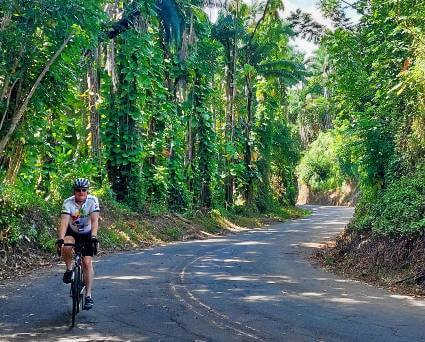
The ride might follow a quiet coastal road, climb inland for a view, pass through small communities or stop somewhere that deserves more than a photograph from the roadside. Lunch might be at a local restaurant or somewhere overlooking the water, with plenty of stops along the way.
By afternoon we are usually at the hotel with time to swim, explore, relax or simply enjoy being on an island before dinner.
What are island roads and traffic like?
Traffic tends to be concentrated around the main towns, ports and larger population centers, while roads farther around the islands are often much quieter.
That is one reason route selection matters. Our guides know where traffic builds, which roads make enjoyable riding and when a short shuttle is preferable to pedaling through a busy section simply to say we rode every kilometer.
Island roads can range from smooth pavement to patched surfaces and occasional short dirt sections, so the bikes are chosen accordingly.
What kind of accommodations do you use on island bicycle trips?
We favor comfortable hotels and resorts with a strong connection to the island rather than choosing familiar chains simply because they are familiar. Most are locally owned or managed, helping keep more of the trip's spending within the communities we visit.
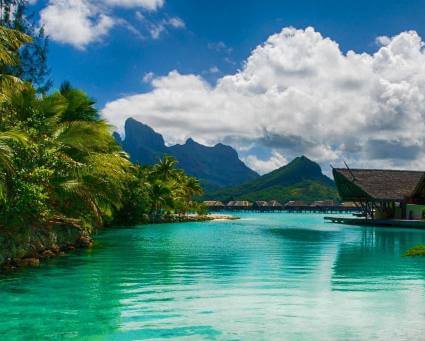
That might mean a small Polynesian resort beside a lagoon or a distinctive Hawai'i property surrounded by volcanic or coastal landscapes. Where we stay is part of experiencing the island, not simply somewhere to store the bicycle overnight.
What are meals like on an island bike tour?
Island food tends to tell you a great deal about the place.
Fresh fish, tropical fruit and local produce naturally appear often in Polynesia and Hawai'i, but each island has its own traditions and outside influences. We look for local restaurants and regional dishes rather than treating meals as generic fuel between rides.
Not every meal is included on every trip, which also gives guests opportunities to explore restaurants on their own when that makes sense.
How is luggage handled on an island bicycle tour?
On most of our island trips, luggage works exactly as it does on our other supported bicycle tours. Your main bags travel ahead in the support vehicle while you ride an unloaded bicycle with only the personal items you want during the day.
French Polynesia is the exception. Because the inter-island ferries do not carry cars or trucks, luggage is transferred separately between the hotels and ferries while the bicycles travel by boat with the group.
Either way, you are not expected to carry overnight luggage on the bike or manage the trip's baggage logistics yourself.
How are Pedalers' island cycling tours supported?
Most operate just like our other guided bicycle tours, with on-bike guides and a support vehicle leapfrogging the riders, carrying luggage, water, tools and supplies and providing a lift when needed.
French Polynesia is the exception because support vehicles cannot move between the islands on the ferries. Those tours are lightly supported instead, with guides riding with the group and local taxis or hotel vehicles available as backup.
The support system changes with the geography, but the goal does not: you concentrate on the riding while we handle the logistics.
Are eBikes available on island cycling holidays?
Yes, eBikes are available on our island tours.
They are pedal-assist bicycles rather than eMotorbikes or scooters. You still pedal, but the motor adds assistance when you want it, which can be particularly useful on island climbs, into a headwind or simply when you would rather save some energy for swimming later.
For riders with different levels of fitness, eBikes can also make it easier for everyone to enjoy the same island journey together.