Scotland with Wind, Water, and Whisky
Active trips through Highland rivers, villages, distillery country, old stone, and big northern skies
A Few Things You May Be Wondering
When is the best time to visit the Scottish Highlands?
Late spring through early autumn works well for the kind of active journey Pedalers offers in Scotland, although we generally avoid late July and August when much of Europe is on vacation and popular areas become considerably busier.
May and June bring very long days, while September can be quieter and still offer excellent conditions for exploring the Highlands.
Scottish weather is famously changeable. Sunshine, cloud, wind and a passing shower can all appear during the same day, so the better question is usually whether you have the right layers rather than whether the forecast contains a rain symbol.
What part of Scotland does Pedalers explore?
Our journey follows the River Spey through the Cairngorms and Speyside, beginning among Highland mountains and forests and gradually moving downstream through villages, farmland and the heart of Scotland's malt-whisky country before the river reaches the Moray coast.
It is a wonderfully concentrated slice of Scotland: mountains, rivers, historic villages, whisky, local food and Highland scenery all tied together by one continuous river.
Is canoeing a great way to explore Scotland?
Very much so. Scotland's landscapes are shaped by water, and a canoe puts you inside that landscape rather than looking at it from a roadside viewpoint.
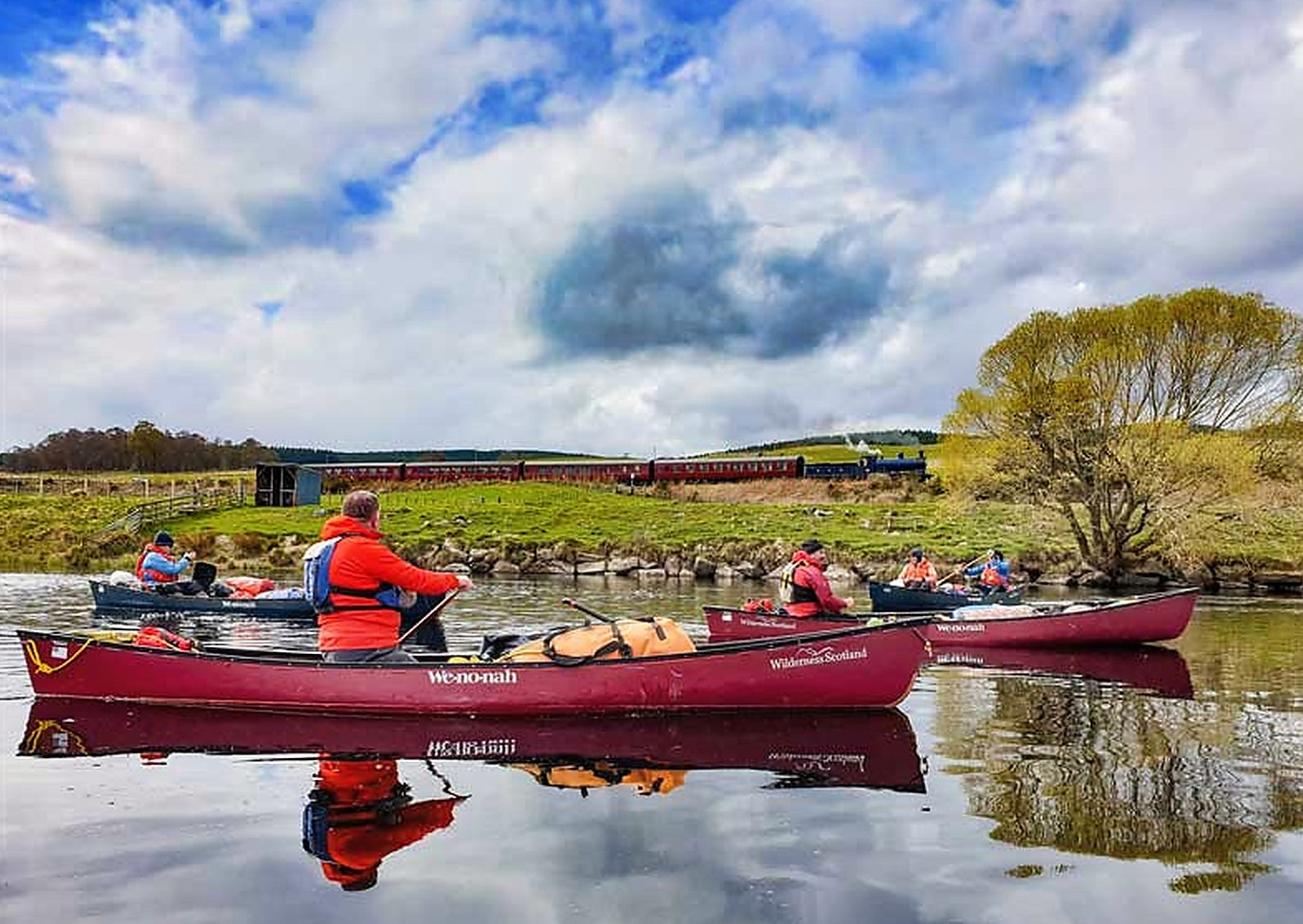
On the Spey, the river carries you from the Cairngorms through forests, villages and whisky country toward the coast. You travel quietly enough to notice wildlife and the changing landscape, yet cover enough ground each day to feel that you are genuinely journeying through the Highlands.
What is an inn-to-inn canoe journey?
It is a continuous point-to-point journey, with each day's paddle carrying you farther down the same river and overnight stops appearing naturally along its course.
Rather than loading the canoe with several days of camping gear, your luggage travels ahead. At the end of the day's paddle you step ashore near a comfortable hotel or inn, take a hot shower, explore the village, enjoy dinner and settle into a proper room for the night.
The next morning you return to the river and continue downstream.
What is a typical day on the river like?
A day might begin with a hearty Scottish breakfast and a look at the river ahead before we put the canoes back on the water.
The Spey does plenty of the work as we travel downstream through forests, farmland and Highland villages. Along the way we might stop for a picnic, explore a historic bridge or village, practice moving-water skills, or leave the river for a whisky distillery or tasting.
By afternoon we reach the day's take-out, with our luggage waiting back at the hotel. There is time for a hot shower and perhaps a wander before dinner built around Scottish produce, followed, if you wish, by a wee dram from somewhere we paddled past earlier in the day.
The rhythm is simple: paddle, discover, eat well, settle into a comfortable room for the night, then continue downstream the next morning.
What kind of accommodations do you use in Scotland?
We favor comfortable, distinctive hotels and inns with local character rather than interchangeable chains.
That can mean a traditional Highland hotel, a Victorian-era property or a family-run boutique hotel overlooking the Spey Valley. Comfort matters after a day outdoors, but so do hospitality, location and a sense that the hotel belongs to the region you have been paddling through.
What is the food like in Speyside?
Speyside has considerably more going for it than whisky. Scottish beef and lamb, salmon, seafood, game, cheeses and seasonal local produce all appear in the region's kitchens, from traditional pub dishes to more refined dinners.
We choose meals for their regional character rather than simply finding something convenient after paddling.
How important is whisky to the trip?
Whisky is part of the story because we are paddling directly through Speyside, one of the world's great whisky-producing regions.
We visit a distillery and include informal tastings along the journey, but nobody is required to drink whisky. The interesting part is also learning why this particular landscape, water, barley and history produced such a concentration of famous distilleries.
What about Scottish midges?
They exist, despite generations of Scots presumably wishing otherwise.
Midges are most active during warmer months, particularly around dawn and dusk when conditions are calm and damp. They are generally a nuisance rather than a danger, and simple precautions such as repellent and suitable clothing deal with most encounters.
Being on a moving river also helps, since midges are much happier in still, sheltered conditions than out in the breeze.